




 Menu
MenuHow Office Noise Hurts Productivity and What to Do About It
Modern workplaces are designed to encourage collaboration, flexibility, and open communication. Open-plan layouts have become common across offices in New Zealand and globally because they allow teams to interact more easily and make efficient use of space.
However, open environments often introduce a new challenge: noise.
Conversations, phone calls, keyboard sounds, and background movement can quickly build into a constant level of noise that makes concentration difficult. While these sounds may seem minor individually, research shows they can significantly affect focus, productivity, and employee wellbeing.
Understanding how workplace noise impacts performance is the first step toward creating office environments that support both collaboration and focused work.

The Noise Problem in Open Offices
Most open-plan offices operate within a relatively narrow range of background sound levels. Research into workplace acoustics indicates that typical open offices measure around 50 to 60 decibels (dB SPL) during normal activity.¹
At first glance this level may not seem particularly loud. For comparison:
- Quiet libraries typically measure around 40 dB
- Normal conversation occurs at about 60 dB
However, the issue is not simply the volume of sound but its unpredictable nature. Sudden speech, phone calls, and nearby conversations are especially distracting because the human brain is naturally wired to process spoken language.
Studies examining office environments have found that speech noise is one of the most disruptive types of sound in workplaces because employees instinctively try to interpret conversations happening nearby. Even relatively moderate sound levels can therefore disrupt concentration when employees are performing tasks that require sustained attention.
How Noise Affects Cognitive Performance
The impact of workplace noise goes beyond simple annoyance. Research shows that noise can have measurable effects on cognitive performance and task accuracy.
A study published in the Journal of Environmental Psychology (2021) found that exposure to speech noise and unpredictable sounds can increase mental workload and reduce task performance.² Employees working in noisy environments were more likely to experience interruptions in concentration and take longer to complete complex tasks.
Other studies have found that noise can lead to:
- Increased task errors
- Slower task completion times
- Higher levels of mental fatigue
- Reduced perceived productivity
These effects are particularly noticeable for work that requires concentration, such as writing, analysis, design work, or complex problem solving.
In open-plan environments where employees perform a mix of collaborative and focused tasks, managing noise becomes essential to maintaining productivity.
Why Speech Noise Is Especially Distracting
Human brains are naturally tuned to process language. Even when we try to ignore nearby conversations, our brains often continue to analyse the speech patterns.
Acoustic research shows that intelligible speech is far more distracting than general background noise such as ventilation systems or distant traffic. This is because speech activates parts of the brain responsible for language processing, making it difficult to filter out.
In workplaces where multiple conversations occur simultaneously, this constant cognitive interruption can make it harder for employees to stay focused on complex tasks. For organisations relying on knowledge work, reducing these distractions can significantly improve overall workplace performance.
Solutions That Reduce Workplace Noise
Fortunately, several effective design strategies can reduce the impact of noise in open offices.
Research published in the Noise Control Engineering Journal (2020) highlights how acoustic treatments and enclosed spaces can reduce reverberation and limit the spread of distracting sound in shared environments.³
Common solutions include:
Soft surfaces such as acoustic panels, carpets, and upholstered furniture can absorb sound and reduce reverberation in open spaces.
These materials help prevent noise from reflecting across large areas of the office.
Separating collaborative areas from focused work zones can reduce the amount of speech noise reaching employees who require quiet environments.
However, in many offices space constraints make full separation difficult.
Enclosed acoustic pods provide one of the most effective ways to create quiet spaces within open-plan offices.
Pods isolate sound using specialised materials and construction techniques, allowing employees to step into a quieter environment for phone calls, video meetings, or focused work.
Because they are self-contained, pods can be installed within existing office layouts without major structural changes.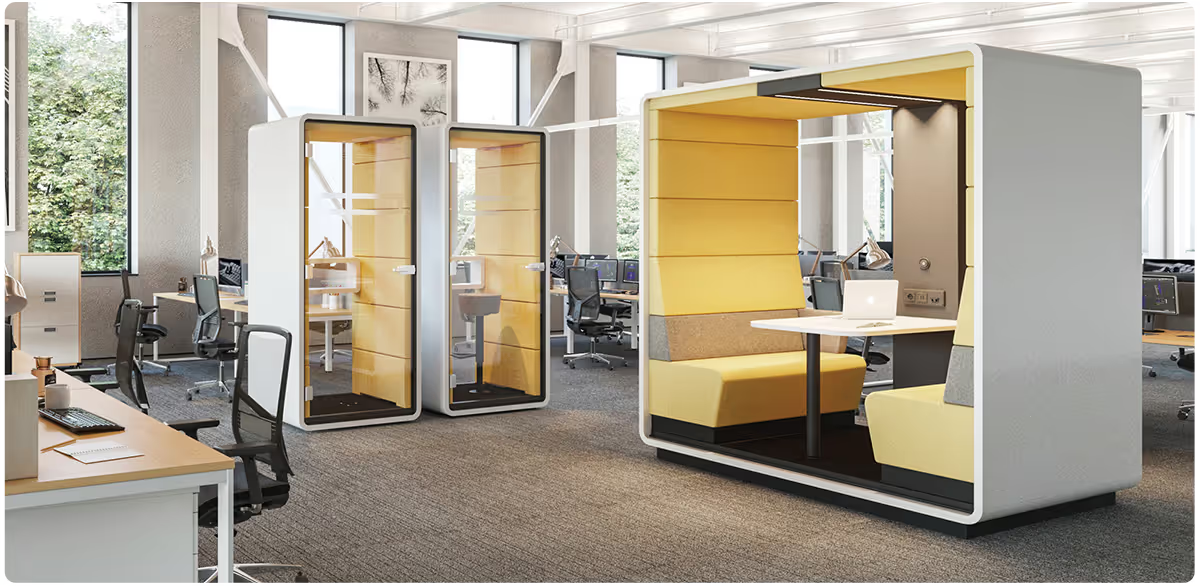
Creating Quiet Zones with Acoustic Pods
Acoustic pods have become increasingly common in modern offices because they provide privacy and noise reduction without requiring permanent meeting rooms.
Products such like HushPods and other acoustic pods are designed specifically to address the challenges of open-plan workplaces.
These pods typically incorporate several acoustic features:
Sound insulation (STC rating)
The Sound Transmission Class rating indicates how effectively the pod reduces sound passing through its walls.
Sound absorption (NRC rating)
The Noise Reduction Coefficient measures how well materials absorb sound within the space.
Sealed construction
Specialised seals and layered materials prevent sound leakage and reduce external noise.
Together, these features create environments where employees can conduct calls, participate in virtual meetings, or perform focused work without disrupting the surrounding office.
Comparing Acoustic Strategies
Different acoustic solutions can reduce noise in different ways. The table below illustrates how common approaches perform in real office environments.
|
Solution |
Noise Reduction Effect |
Best Use Case |
|
Soft furnishings and acoustic panels |
Reduces reverberation but does not isolate speech |
General noise control |
|
Space zoning |
Separates quiet and collaborative areas |
Larger office layouts |
|
Acoustic pods |
Isolates speech and creates quiet spaces |
Calls, meetings, focused work |
In many workplaces, the most effective approach combines multiple strategies. Acoustic materials help manage overall sound levels, while pods provide dedicated quiet zones for tasks that require concentration.
Designing Offices That Support Focus
Open-plan workplaces will likely remain common because they support collaboration and efficient space use. However, modern office design increasingly recognises the need to balance collaboration with environments that support concentration.
By incorporating acoustic treatments and quiet spaces such as pods, organisations can create workplaces that support a wider range of work styles. Employees can collaborate when needed, while still having access to environments that allow them to focus on complex tasks.
Noise is one of the most common challenges in open-plan offices. While moderate background sound may seem harmless, research shows that speech noise and unpredictable sounds can disrupt concentration and reduce productivity.
Acoustic design strategies such as sound-absorbing materials, thoughtful layout planning, and enclosed acoustic pods can significantly reduce these effects. By creating dedicated quiet spaces within busy offices, organisations can support both collaboration and focused work, improving the overall performance and comfort of their workplaces.
BFG provides a range of solutions to workspace noise; whether it's for an open-plan office, noisy worksites, or work from home setup. Speak with a professional today to take the first step in boosting productivity, or browse our offerings if you're in the mood for some window shopping.
Sources:
- Haapakangas, A. et al. (2019). The Effects of Office Noise on Cognitive Performance. Building and Environment.
https://www.sciencedirect.com/journal/building-and-environment - Jahncke, H. et al. (2021). Office Noise and Cognitive Performance. Journal of Environmental Psychology.
https://www.sciencedirect.com/journal/journal-of-environmental-psychology - Hodgson, M. (2020). Acoustic Design Strategies for Open Offices. Noise Control Engineering Journal.
https://ncej.org - An Experience Sampling Study of Employees’ Reactions to Noise in the Open Office, Oluremi B. Ayoko, Journal of Business Research (2023)
https://www.sciencedirect.com/science/article/abs/pii/S0148296322009109
Working From Home in 2026: Creating a Comfortable and Productive Home Workspace
Working from home has become a normal part of professional life in New Zealand. While many employees have returned to offices in some capacity, hybrid work remains common across a wide range of industries. As this shift continues, more people are recognising the importance of creating a proper home workspace. A well-designed setup can improve productivity, reduce physical strain, and make remote work significantly more comfortable.
READ MORE